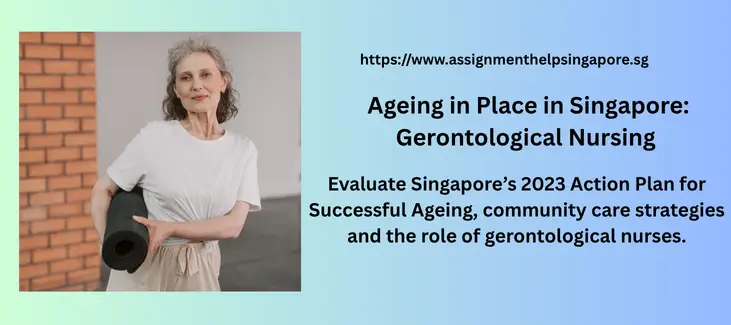
HS8738 Gerontological Nursing – Ageing in Singapore
Assignment Requirement
The desire of older adults in Singapore to remain at home and within familiar communities does not diminish with age but deepens over time. Yet ageing in place is not simply a matter of personal choice. It requires a robust ecosystem of healthcare services, community support and infrastructure to ensure that older adults can live safely, independently and with dignity. As Singapore prepares for 2030, with 1 in 4 citizens aged 65 and above, gerontological nurses are increasingly called upon to play a pivotal role in making ageing in place a sustainable reality.
With reference to the 2023 Action Plan for Successful Ageing, students are to critically evaluate the initiatives in supporting older adults to age in place.
The Assignment Must Include
- Ageing in place and its influence on the quality of life of older adults in Singapore.
- Critical evaluation of the two (2) chosen strategies from across the following chapters for their effectiveness in supporting older adults to age safely in the community:
- Chapter 4: I Find Care in My Singapore
- Chapter 6: I am Connected in My Singapore
- Select one (1) of your chosen strategies and discuss the role of gerontological nurses in strengthening its effectiveness in supporting older adults to age in place in Singapore.
- Summarise the key issues and conclude by drawing on the information discussed above. Do not introduce new information in the conclusion.
- The written assignment must reflect critical analysis and show evidence of wide reading, drawing evidence from journal articles and books.

Want Help Structuring Your Answers
 Professional Nursing Experts
All Subjects Covered
Professional Guidance
Experts Answer on Above Nursing Questions on Ageing in Singapore
The two strategies selected for analysis that address both healthcare needs and social connectedness are:
chapter 4: Managing dementia through community outreach teams (CREST) and post Diagnostic support.
Chapter 6 – living independently within the community through housing come care options.
Ageing in place and its influence on quality of life
Ageing in place implies providing healthcare support to older adults within their home and familiar communities. In simple terms, it implies that the physical assistance and social support required by the older community are provided within their home. This particular concept allows the ageing population in Singapore to preserve independence, dignity, family relationships and community belonging. However, this practice can become unsafe if the older adults experience falls, frailty, social isolation, chronic illness or inadequate support from the care provider. In order for ageing in place to be effective, the older persons would be supported with accessible healthcare, suitable housing, financial assistance and reliable community services.
Critical evaluation of the two strategies
Strategy 1 – chapter 4 – community outreach teams (CREST)
CREST team is responsible for supporting the seniors that are faced with issues like dementia or mental health difficulties. This team is responsible for providing authority and connecting with the ageing using appropriate assessment and support. The Action Plan includes CREST- post Diagnostic support which is useful for the families in accessing resources after a dementia diagnosis. The proposed plan is aimed at increasing the CREST team members from 61 to 73.
Effectiveness – by having early identification, it is possible to reduce delays in diagnosis, improve care planning and allow older adult to remain safe in familiar surroundings.
Limitations – the main limitation is the acceptance of support by the senior, as there is a possibility of lack of participation from Limited awareness, language barriers and caregiver exhaustion.
Strategy 2 – chapter 6 – living independently within the community
The action plan promotes housing cum-care options which allows seniors to remain connected to their community while getting support as their care needs change. Community care apartments therefore integrate senior friendly housing with access to care and social activities.
Effectiveness – this particular approach is effective as it supports independence and reduces any risk of living alone. Accessible housing nearby services also improves safety and reduces isolation.
Limitation – this particular approach is not affordable for every older adult. Seniors faced with advanced dementia or complex medical conditions may require intensive care, and the effectiveness of this particular strategy therefore depends on affordable access.
Role of gerontological nurses in strengthening CREST
There are various important ways in which gerontological nurses can strengthen CREST such as by way of early assessment, care coordination, caregiver education, personalized care planning, and continuity of care.
| This model answer is reviewed by Amanda Wun, Nursing Graduate from Ngee Ann Polytechnic a nursing expert excellent in analysing nursing case studies on ageing. Disclaimer: The response above to the case study is provided for academic study purposes and is not intended to offer any kind of medical advice, diagnosis or treatment guidance. This answer is a model for study and reference purposes only. Please do not submit it as your own work. |
Want a Full Worked Out Answer with References?
With professional nursing experts, it is quite possible to perform analysis of action plans on successful ageing, evaluate community care strategies and understand the role of gerontological nurses effectively. Simply with our nursing assignment help page to get a professional nursing expert today, or if you need help with any other subject assignment, visit our assignment help homepage for best assistance. Also evaluate the writing styles and standards of our experts by checking solved answers from Nanyang Polytechnic.

Related answers
 Nursing Accountability & Professional Negligence in Singapore
- Therapeutic Activities for Older Adults in Singapore
- Sport Psychology: Exercise Dependence, Injury & Burnout
- Older Adult Complex Care: Raymond Tan Case Singapore
- Postnatal Depression: Signs, Risk Factors & Support
- MediSave Withdrawal Limits for Outpatient Treatment
- Madam Sumi Active Ageing Case Study: Health & Fall Prevention
- Gen AI in Healthcare Decision Making Policy Brief Singapore
- Nutrition Care Process SOAP Case Study: Diabetes Patient
- Pharmacy Management and Cardiovascular Risk Assessment


